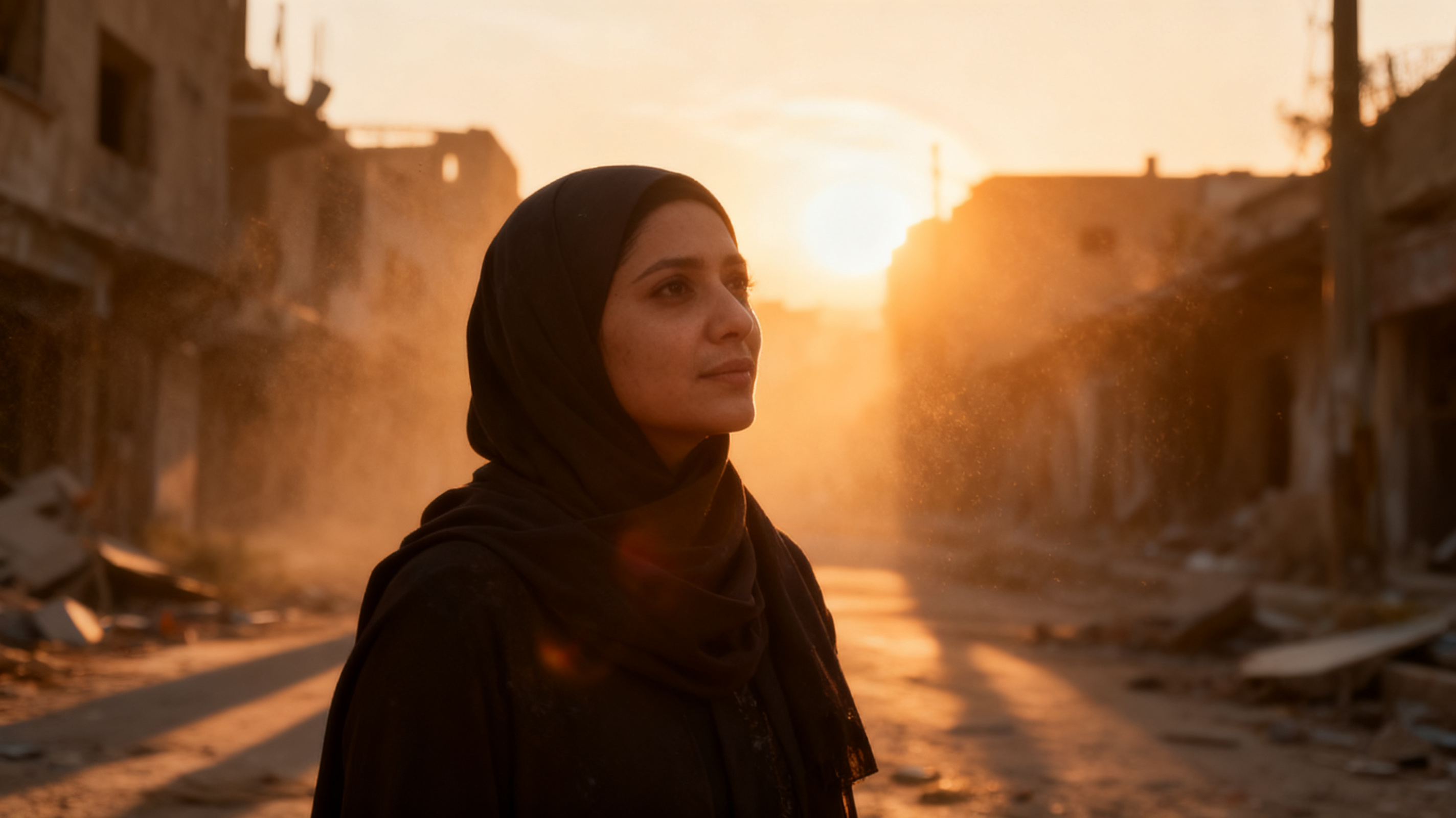
The Weaponization of Women’s Liberation: How Muslim Women Became the Perpetual Project of Empire
The bomber pilot needs a story. Before he releases the payload that will turn a wedding party into a crater, before the missile screams through the sky toward a hospital or a school, he needs a narrative that lets him sleep at night. And for two centuries now, that narrative has had a consistent protagonist: the oppressed Muslim woman, waiting—always waiting—for Western intervention to set her free.
This isn’t new. What’s remarkable is how little the script has changed. The French justified their brutal occupation of Algeria by promising to liberate women from the veil. The British rationalized their colonial violence in Egypt and India through the same lens. The Americans sold the invasion of Afghanistan with images of burqa-clad women, promising liberation through cruise missiles. And today, from Xinjiang to Kashmir to the suburbs of Paris, the same framework persists: Muslim women need saving, and the state—with its prisons, its surveillance apparatus, its military might—is the savior.
But here’s what they never tell you: the women targeted for “liberation” rarely ask for the kind of freedom being offered. And the women who do organize, who do resist, who do build movements on their own terms? They’re the first ones silenced.
The Eternal Victim, The Convenient Narrative
The colonial obsession with Muslim women isn’t about care. It’s about control. It always has been.
When Lord Cromer, the British consul-general in Egypt, championed women’s rights in the early 1900s, it wasn’t because he believed in equality. Back in England, he led the Men’s League for Opposing Women’s Suffrage. But in Egypt, suddenly, the veil was an urgent problem requiring British intervention. The contradiction wasn’t hypocrisy—it was strategy. The project wasn’t women’s liberation; it was the legitimization of empire.
Fast forward to 2001. Laura Bush, in a radio address that now reads like a dark comedy, declared that the “fight against terrorism is also a fight for the rights and dignity of women.” The Taliban’s oppression was real. The suffering of Afghan women was real. But the solution offered—two decades of occupation, hundreds of thousands dead, a country left in ruins—had nothing to do with liberation. The Taliban are back in power. Afghan women are more restricted than ever. But the bombs? Those were very real. The surveillance infrastructure left behind? Still operational. The precedent set for future interventions? Firmly established.
This is the pattern. Muslim women’s oppression becomes the moral cover for projects that have nothing to do with women’s rights. The veil becomes a symbol of backwardness requiring intervention. And the intervention—whether colonial occupation, drone strikes, or mass surveillance—always, somehow, ends up targeting the very communities it claims to save.
When Real Resistance Becomes a Security Threat
Here’s where the mask slips entirely: what happens when Muslim women actually organize for liberation on their own terms?
Take Asiya Andrabi in Kashmir. A pharmacist who founded Dukhtaran-e-Millat (Daughters of the Nation), she’s been imprisoned for years under India’s draconian Unlawful Activities Prevention Act. Her crime? Advocating for Kashmir’s right to self-determination. Organizing women in her community. Refusing to accept Indian occupation as legitimate.
She wasn’t waiting for Western saviors. She was building resistance from within her own framework, rooted in her own faith and community. And for that, she’s labeled a terrorist. For that, she’s subjected to a legal regime designed to crush dissent without trial, without evidence, without hope of justice.
The irony is surgical: the same states that claim to care about Muslim women’s freedom are the ones imprisoning the women who actually organize for it. France bans the hijab in the name of liberating women, then fines and harasses the women who choose to wear it. China claims to be “de-extremifying” Uyghur women through mass detention and forced sterilization. India prosecutes Kashmiri women activists while its politicians speak eloquently about women’s empowerment.
The pattern reveals the truth: this was never about liberation. It’s about who gets to define what liberation looks like, and who gets punished for rejecting that definition.
The Sexualization of Liberation
There’s a darker layer here that rarely gets named directly. The Western imagination of Muslim women’s liberation is deeply sexualized. The unveiling isn’t just about freedom—it’s about exposure, about availability, about bringing Muslim women into a framework where their bodies can be consumed by the male gaze that defines “freedom.”
This isn’t subtle. Look at how “liberated” Muslim women are portrayed in Western media: unveiled, Westernized, often romantically or sexually available to Western men. Look at how French postcard photographers in colonial Algeria posed local women in states of undress they would never appear in publicly, selling these images back to Europeans as glimpses of “Oriental authenticity.” Look at how contemporary discourse frames hijab-wearing women as sexually repressed, with “liberation” consistently imagined through the lens of sexual availability.
The hijab becomes threatening not because it oppresses women, but because it refuses the terms of engagement set by a culture that commodifies women’s bodies. It says: my body is not for your gaze. My worth is not determined by your standards. My liberation doesn’t require your approval.
And that refusal? That’s what can’t be tolerated.
So What Does This Mean For You?
If you’re Muslim, this affects you directly. Your sister’s hijab is political whether she wants it to be or not. Your mother’s choice to cover or not cover is scrutinized through a framework that has nothing to do with her agency and everything to do with state power. The woman organizing in your community for Palestinian rights or against Islamophobia? She’s one policy shift away from being labeled a security threat.
If you’re not Muslim, you need to understand that every time “women’s rights” is invoked to justify military intervention, surveillance expansion, or discriminatory policies, you’re watching empire at work. The women being “saved” rarely asked for the salvation being offered. And the price of that salvation is always paid by the communities being targeted.
This matters because the framework doesn’t stay contained. The surveillance state built to monitor Muslim communities gets used on everyone. The legal precedents established to prosecute activists like Asiya Andrabi become tools against all dissent. The logic that says “we must restrict freedom to protect freedom” never stops with its initial targets.
Take Home Points
-
Historical pattern recognition: From colonial Algeria to contemporary Kashmir, “saving Muslim women” has consistently been the moral cover for imperial violence, occupation, and surveillance.
-
The liberation trap: States that claim to champion Muslim women’s rights are often the same ones imprisoning, surveilling, and prosecuting Muslim women who organize for self-determination on their own terms.
-
Selective feminism reveals the lie: If Muslim women’s oppression under the Taliban justifies invasion, why doesn’t their oppression under Western-backed regimes? The inconsistency exposes that this was never about women’s rights.
-
Sexualized liberation: The Western imagination of Muslim women’s freedom is deeply tied to unveiling and sexual availability—liberation defined not by agency but by conformity to Western male gaze and consumption.
-
Your resistance matters: Whether Muslim or not, refusing this framework—questioning interventions framed as “feminist,” supporting Muslim women’s actual organizing, rejecting Orientalist narratives—is how we break the cycle.
Sources: