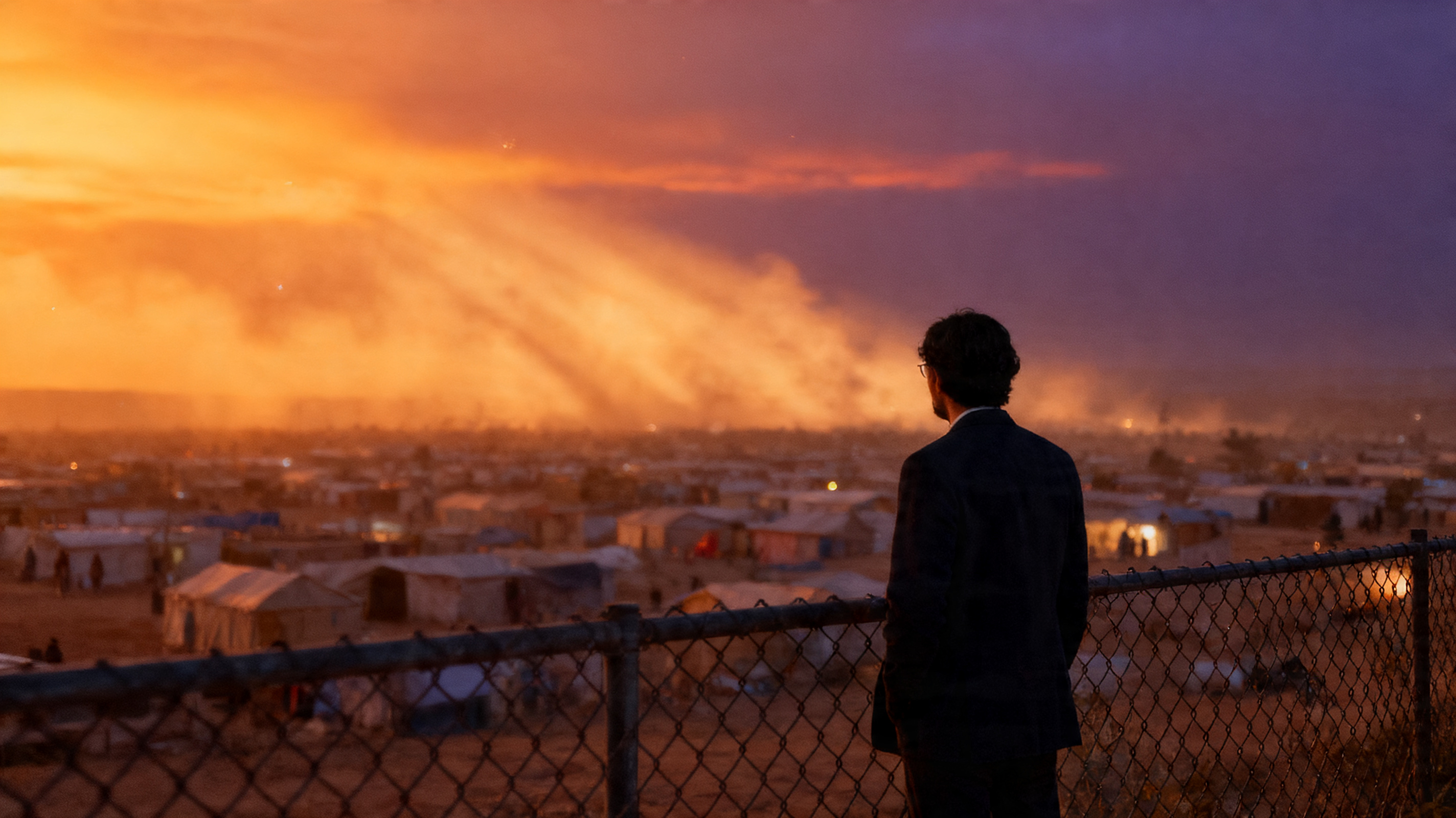
The Invisible Allies: How America’s Afghan Refugee Crisis Exposes the True Cost of Forever Wars
There’s a hadith that haunts me lately: “Help your brother whether he is an oppressor or oppressed.” When asked how to help an oppressor, the Prophet ﷺ said, “By preventing him from oppressing others.” I think about this when I read that the United States—the nation that spent twenty years promising freedom to Afghanistan—is now proposing to dump its Afghan allies in Congo. Not resettle. Not integrate. Dump. Like unwanted furniture after a house move.
This isn’t policy. This is betrayal dressed in bureaucratic language. And it reveals something more sinister than one administration’s cruelty—it exposes the rotting foundation of how Western powers wage their “forever wars.”
The Pattern of Promises
Let me take you back. August 2021. Kabul airport. Desperate Afghans clinging to the wheels of departing American planes, some falling to their deaths. The images shocked the world, but the abandonment didn’t start there. It started two decades earlier, when the US began recruiting translators, intelligence officers, fixers—ordinary Afghans who believed the promise that democracy and freedom were worth dying for.
These weren’t mercenaries. They were teachers who became translators because they wanted their daughters to read. Shopkeepers who became informants because they dreamed of a country without Taliban rule. Young men who joined the Afghan National Army believing in the vision sold to them: a modern, free Afghanistan protected by the world’s most powerful military.
The Americans called them “allies.” The Taliban called them traitors. And now, neither side wants them.
From Kabul to Kinshasa: A Geography of Disposability
The proposal to relocate Afghan refugees to the Democratic Republic of Congo isn’t just callous—it’s revealing. Congo, a nation still wrestling with its own internal conflicts, economic instability, and the legacy of colonial extraction. Congo, where the rule of law is fragile and infrastructure is fractured. Congo, which has never asked to be a dumping ground for America’s discarded promises.
This isn’t humanitarian policy. This is geopolitical housekeeping. Move the “problem” somewhere out of sight, somewhere that won’t affect polling numbers or immigration debates. Somewhere brown people dealing with other brown people’s problems won’t trouble the American conscience.
But here’s what the architects of this plan either don’t understand or don’t care about: displacement isn’t a discrete event. It’s a domino effect. When you relocate vulnerable populations to already fragile states, you don’t solve a crisis—you export it. You create new tensions over scarce resources. You seed resentment between locals and newcomers. You build the conditions for tomorrow’s conflicts.
I’ve seen this playbook before. The Rohingya in Bangladesh. Syrian refugees overwhelming Lebanon and Jordan. Palestinian generational displacement that has now spanned 76 years. Each time, Western powers express concern, maybe send some aid, and then move on. The people left behind become permanent refugees, permanent problems, permanently invisible.
The True Arithmetic of Forever Wars
Let’s do some honest accounting. America spent over $2 trillion in Afghanistan—that’s trillion with a T. Roughly $300 million per day for twenty years. Enough to rebuild every crumbling school, bridge, and hospital in the United States twice over. And what did that money buy?
It bought temporary security for some. It bought contracts for defense corporations. It bought careers for generals and consultants. But it did not buy lasting peace, functioning institutions, or genuine freedom for Afghans. When the money stopped flowing, the whole house of cards collapsed in weeks.
Now consider what that same $2 trillion could have bought if invested in actual development—not military contractors, but teachers, engineers, doctors. Not occupation, but partnership. Not domination, but dignified cooperation.
But that was never the point, was it? The point was presence. The point was bases. The point was projection of power. The Afghan people—and especially those who believed in the American promise—were always means to an end, never the end themselves.
This is what makes the Congo proposal so obscene. After using these people as human shields, intelligence assets, and cultural translators, after putting them and their families in mortal danger, the response is: “Go be someone else’s problem.” It’s the geopolitical equivalent of ghosting.
When Loyalty Becomes a Death Sentence
Here’s the part that should keep us up at night: every Afghan who sees this news is learning a lesson. Every Iraqi who helped Americans is taking notes. Every future population that might cooperate with Western military interventions is watching how “allies” are treated when the cameras leave.
The message is clear: your loyalty is worth exactly as much as our political convenience. When helping us becomes politically costly, you become expendable.
This creates a moral hazard that will haunt American foreign policy for generations. Why would anyone trust future American promises? Why would any local population believe in American-backed institutions? The United States has just advertised that it abandons those who sacrifice for its cause.
And from an Islamic perspective, this is the ultimate test of covenant. Allah says in the Quran: “O you who believe, fulfill your covenants” (5:1). A promise made isn’t just words—it’s a sacred trust. When you promise protection in exchange for service, you don’t get to renegotiate when it becomes inconvenient. You honor it, or you accept that you’ve failed a fundamental moral test.
So What?
You might think this is just another story of geopolitical callousness, another headline to scroll past. But this is a mirror showing us the true face of how power operates in our world. It’s showing us that the language of freedom, democracy, and human rights can be weaponized, deployed tactically, then discarded when politically expedient.
This matters because the forever war mentality isn’t confined to Afghanistan. It’s the same logic that fuels interventions everywhere: promise transformation, create dependency, extract what’s useful, then disappear. The wreckage left behind—shattered societies, displaced peoples, generational trauma—becomes someone else’s problem.
For Muslims specifically, this is a call to action. If we claim to care about justice, about protecting the vulnerable, about honoring covenants, we cannot be silent when people are treated as disposable. Our deen doesn’t allow us to shrug and say, “Not my problem.” Every refugee, every displaced person, every abandoned ally is our concern.
And for anyone who still believes in the myth of benevolent Western intervention: this is your wake-up call. Humanitarianism is not the same as imperialism with better PR. Real care for human dignity doesn’t end when it becomes politically costly.
Take Home Points
-
Displacement is a weapon: Moving refugee populations to unstable regions doesn’t solve humanitarian crises—it exports and multiplies them, creating cycles of instability that span generations.
-
Broken promises break future cooperation: How the US treats Afghan allies today determines whether anyone will trust American promises tomorrow. Betrayal has compound interest.
-
Wars don’t end when troops leave: The true cost of military intervention is measured not in dollars spent during occupation, but in human lives destabilized for decades after withdrawal.
-
Moral tests transcend politics: The Afghan refugee crisis isn’t a Democrat or Republican issue—it’s a test of whether powerful nations honor their covenants or treat people as disposable tools.
-
Silence is complicity: Whether Muslim, Christian, secular, or otherwise, we have a duty to speak against policies that treat human beings as geopolitical inconveniences. Justice delayed is justice denied; justice for some but not others is not justice at all.
Sources:
- The New York Times: “Afghan Refugees Face Relocation to Congo Under US Proposal” (https://www.nytimes.com/2026/04/21/world/europe/afghan-refugees-congo-us.html)
- The Guardian: “Trump Administration Proposes Relocating Afghan Refugees to Congo” (https://www.theguardian.com/us-news/2026/apr/21/afghan-refugees-us-congo)